How to write your first resume without work experience
Use coursework, projects, volunteering, and everyday responsibilities to show what you can bring to your first role.
 Maya Patel

Your first resume does not need to look like the resume of someone with ten years of experience. It needs to show the useful things you have learned, the work you have completed, and the responsibilities you have handled.
Start with the role you want. A relevant example from a class project can tell an employer more than a long list of unrelated activities.
Make a list before choosing a layout
Write down projects, part-time work, volunteering, clubs, caring responsibilities you wish to mention, and tasks you have taken on for a community group. Include informal work if it helps explain a relevant skill.
For each item, note what you did, who it was for, and what you produced. Organizing an event, maintaining a shared spreadsheet, tutoring a student, or building a small website can all provide specific evidence.
Put your strongest evidence first
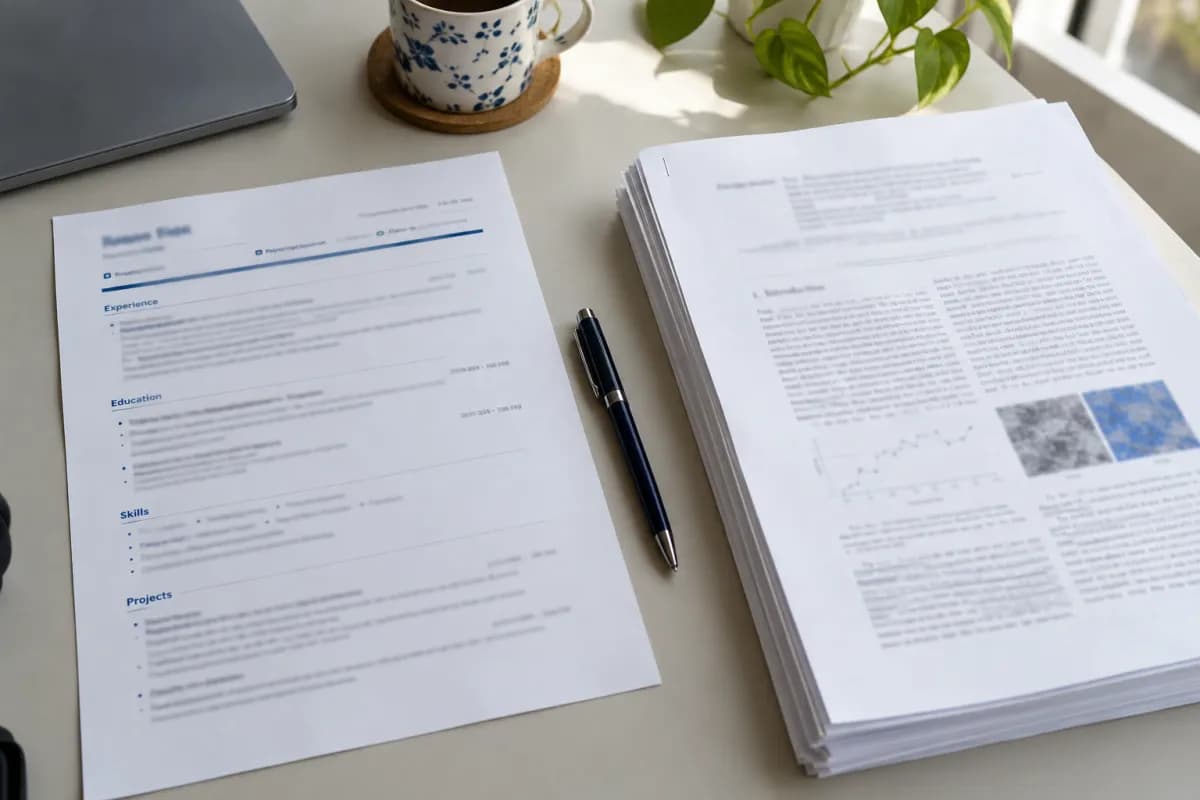
If your education and projects are more relevant than your work history, give them more space. A useful starting order is:
- Name, email, location, and a relevant portfolio link.
- Education, including selected coursework when it helps.
- Projects with a short description of your contribution.
- Work, volunteering, or other relevant experience.
- Skills you can demonstrate or discuss.
You can add a brief summary if it explains the type of role you are seeking. Skip it if it repeats information that is already clear.
Describe a project as work you completed
Give the project a clear name and explain its context. Label a course project as a course project so the reader understands how the work happened.
For example, an illustrative entry might read: Built a course registration prototype with two classmates; designed the signup form, checked keyboard navigation, and documented the setup steps.
That description identifies your contribution. It gives you something concrete to discuss in an interview and avoids overstating the project's scale.
Turn everyday activities into evidence
Experience that feels ordinary to you may show exactly what an employer needs. These illustrative examples show how to describe it:
| Activity | What it can show | How you might write it |
|---|---|---|
| Weekend retail job | Customer service, reliability | Served customers during busy weekend shifts and balanced the till at closing |
| Club treasurer | Budgeting, record keeping | Tracked club spending in a shared spreadsheet and reported to the committee each month |
| Tutoring | Communication, planning | Planned weekly math sessions for two younger students |
| Group project | Teamwork, ownership | Wrote the research section and combined three drafts into the final report |
Notice that none of these descriptions exaggerate. They simply say what happened in plain language.
Write a short summary if it helps
A summary can be useful when your background does not make your goal obvious. Keep it to one or two sentences that state what you are studying or have finished, what you can offer, and what you are looking for.
For example: Final-year business student with experience in customer service and event planning, looking for an entry-level operations role.
That is more useful than “Motivated individual seeking an opportunity to grow.” If you are looking for a broader mix of jobs, adjust the sentence for each kind of application.
Avoid common first-resume mistakes
A few small choices can make a first resume look more polished:
- Use a simple, professional email address.
- Keep to one page, which is usually plenty at this stage. See our guide to resume length.
- Leave out your date of birth and other personal details unless they are expected where you are applying.
- List your high school only if it is your highest qualification or the job asks for it.
- Remove the line “References available on request.”
If you are unsure about local norms, such as adding a photo, check examples for the country where you are applying.
Keep the final version selective
Choose examples that connect to the job description. Remove skills you could not explain and generic claims such as “excellent at everything.” Use the available space for useful details rather than filling it with repeated adjectives.
Ask someone to review the exported file for unclear wording, broken links, and missing contact details. Then use our guide to writing stronger bullet points to make the examples easier to follow.