How to write a resume that gets you noticed
Turn a list of responsibilities into a clear, compelling picture of what you bring to the next role. Here’s where to start.
 Maya Patel

A good resume helps someone understand your work quickly. It gives them a clear sense of what you can do, where you have made a difference, and why that experience belongs in their team.
You do not need a dramatic career story to write one. You need a few well-chosen details and a structure that makes those details easy to find.
Start with the role you want
Before opening a template, choose a job description that represents the kind of work you want next. Read it once for context, then again with a pen or a blank document beside you.
Write down three things: the problems the person will solve, the skills they will use, and the outcomes the team cares about. Look for evidence of those things in your own experience.
For example, a customer support role might emphasize onboarding, clear written communication, and improving a help center. Your most relevant experience could be training new colleagues or rewriting internal instructions, even if your previous title was different.
Keep a longer master document of your experience. Use it as a source for a focused resume each time you apply.
Give the reader a clear route through your work
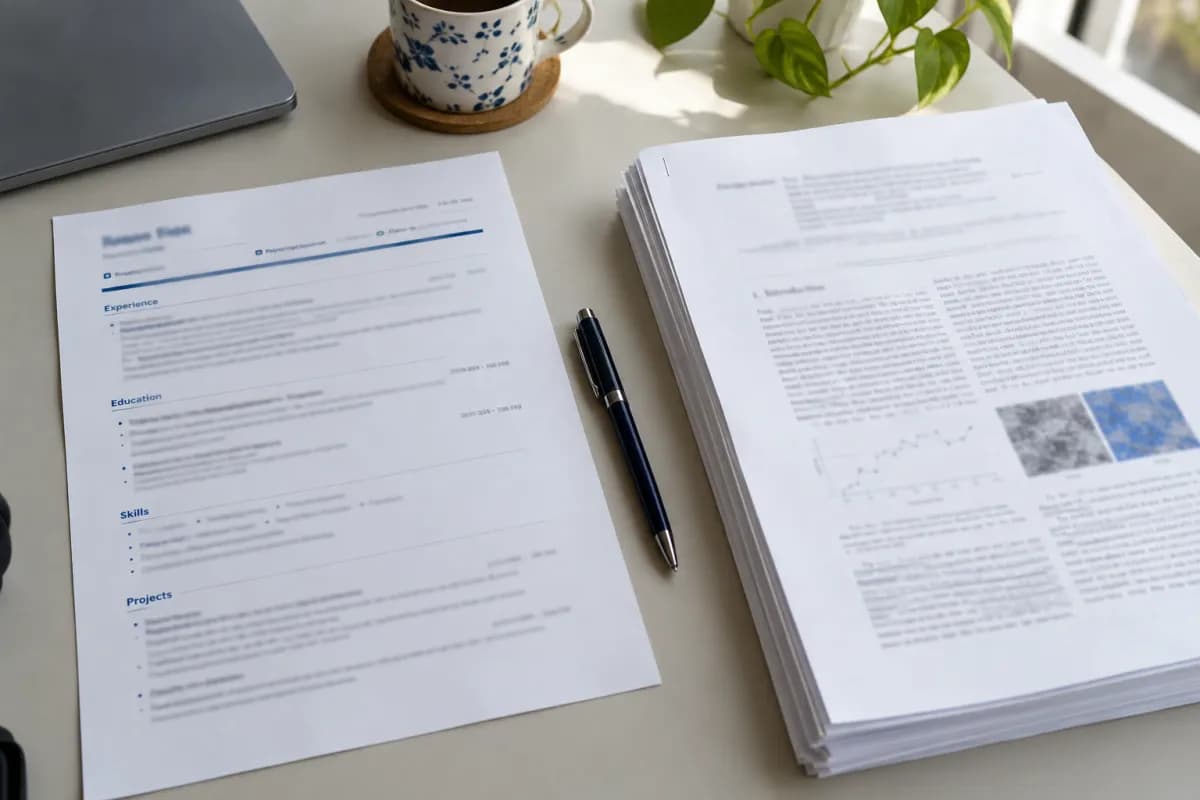
A simple structure is usually a useful starting point:
- Name and contact details. Include a professional email, your city or region, and relevant portfolio or profile links.
- A short summary, when it adds context. Explain the kind of work you do and the experience that makes you relevant.
- Work experience. Put the most recent experience first and give the most relevant roles the most space.
- Skills. Focus on capabilities you can support with examples.
- Education and relevant projects. Move these higher if they are your strongest evidence.
Use familiar section headings so a reader can find what they need. You can adjust the order to suit your experience, but make each section earn its place.
Turn responsibilities into evidence
“Responsible for weekly reports” tells a reader what was on your task list. It leaves out how you worked and what your contribution changed.
A useful starting pattern is action + context + outcome. Here is an illustrative rewrite:
| Starting point | More useful detail |
|---|---|
| Responsible for reports | Consolidated weekly sales reports into one shared dashboard, helping the team compare regional performance. |
| Helped with onboarding | Created a first-week checklist and guided new colleagues through the support workflow. |
| Managed social media | Planned a monthly content calendar and coordinated product announcements with the design team. |
Numbers can help, but only when they are accurate and meaningful. If you cannot verify a percentage, describe the scope, audience, complexity, or result in plain language.
For more examples, read our guide to writing stronger resume bullet points.
Edit for relevance and breathing room
A resume is a selected account of your work. Read each bullet and ask: does this help the reader understand why I could do this job?
Remove repeated points. Replace vague phrases such as “results-driven professional” with specific work. Give older or less relevant roles less space. Keep enough detail to explain the experience without making every role look equally important.
Check the layout at a normal reading size. If the page only works with tiny type and narrow margins, cut or reorganize the content before compressing the design.
Check the version you actually send
Your final review should happen in the exported document. Open it, read it from beginning to end, and check that the links work and the page breaks make sense.
- Confirm your email address and phone number.
- Keep dates and punctuation consistent.
- Check names, tools, and job titles for spelling.
- Follow the employer’s requested file format.
- Give the file a clear name, such as
Alex-Morgan-Resume.pdf.
When you are ready, choose a resume template and build a first version. Aim for a document that makes your relevant experience easy to understand. You can refine the wording once the story is clear.