How to write a short cover letter that stays specific
A simple three-paragraph structure for explaining your interest, sharing a relevant example, and closing clearly.
 Maya Patel
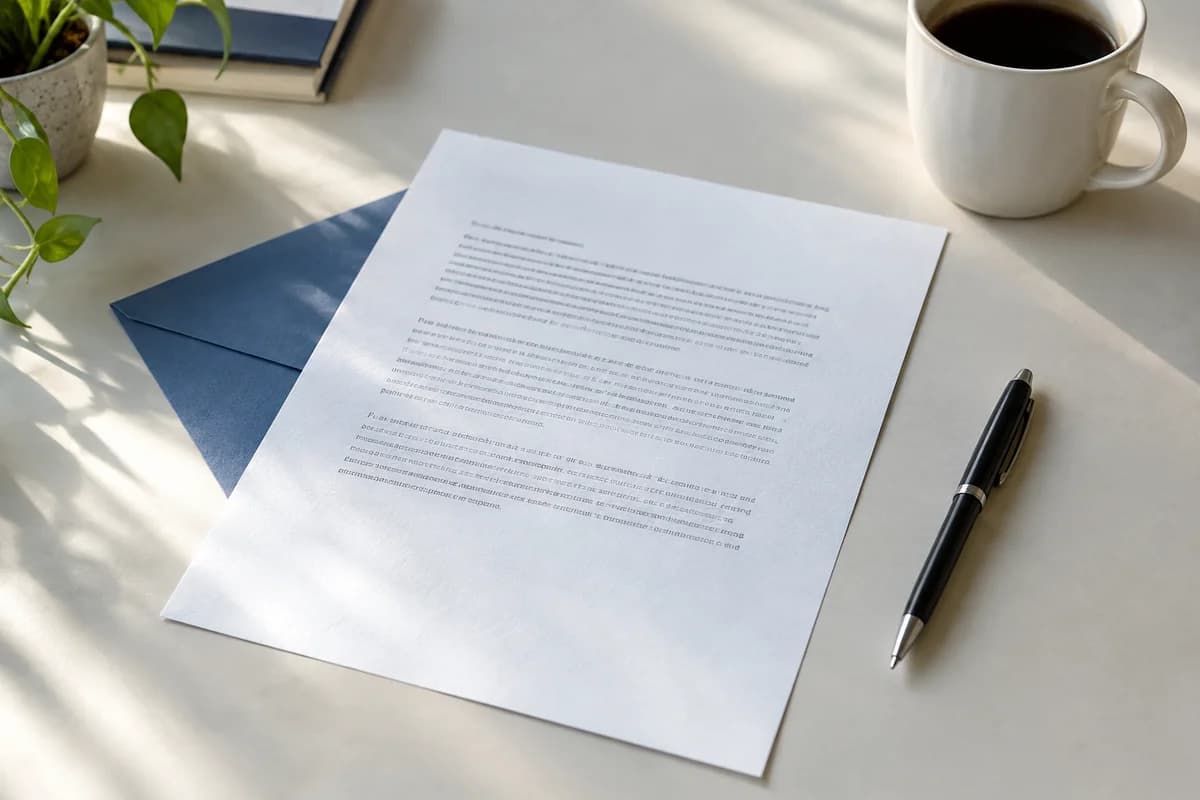
A short cover letter can still provide useful context. Choose one point you want the reader to understand, support it with an example, and remove the sentences that do not help explain it.
Before writing, check whether the employer has requested a letter or specific information. Use those instructions to decide what needs to fit.
Use the opening to explain your interest
Identify the role and give a specific reason the work interests you. Refer to something you can discuss honestly, such as a responsibility in the listing or a project described by the organization.
Avoid spending the opening paragraph on a broad statement about how hard you work. Make the connection to this role clear enough that the letter could not be sent unchanged to every employer.
Give the middle paragraph one job
Choose a relevant example and explain your contribution. Include enough detail for the reader to understand the situation and the work you did.
For example, someone applying for a coordinator role might describe tracking tasks across a small team and keeping stakeholders informed. They could then explain how that experience relates to the coordination responsibilities in the new role.
Keep the example accurate. You can explain useful work without claiming ownership of an entire team's result.
If a paragraph contains several unrelated examples, choose the one that best supports the application and give it room to make sense.
Close with the next conversation in mind
Thank the reader and state your interest in discussing the role. Include any requested portfolio link or availability information, and check that your contact details are easy to find.
Read the letter alongside your resume. Remove repeated lists of responsibilities unless you are adding context that the resume cannot show briefly.
How short is short enough?
There is no single correct length. As a rough guide, three paragraphs and about 150 to 200 words will explain your interest without asking too much of the reader. That is also close to what fits comfortably in the body of an email or a text box on an application form.
If the form sets a character limit, write to that limit and check whether anything was cut off when you pasted it. If the employer asks specific questions, make sure you answer them, even if the letter grows slightly as a result.
An example you can adapt
Here is an illustrative letter of about 120 words:
Dear Hiring Team,
I am applying for the Project Coordinator role because your plan to bring supplier onboarding into one process matches work I enjoy and have done before.
At Northside Logistics, I tracked tasks for a five-person team moving to a new ordering system. I kept a shared timeline, sent weekly updates to the warehouse managers, and followed up on overdue items, which helped the team spot problems before they delayed the rollout.
I would welcome the chance to discuss how that experience could support your team. Thank you for your time.
Sincerely, Alex Morgan
Replace every detail with your own. The structure is what matters: one reason for your interest, one example, and one clear close.
Mistakes that make a short letter feel thin
Brevity is helpful only when the remaining content is specific. Look out for these common problems:
- Restating your resume in sentence form.
- Using an opening that could apply to any employer.
- Apologizing for experience you do not have.
- Forgetting to say which role you want.
- Leaving another company’s name in from an earlier application.
Edit for meaning before cutting words
Shortening a letter should make it easier to follow. Replace long introductions with direct sentences, remove duplicated phrases, and keep the details that explain your fit.
Read it aloud once to catch awkward wording. Then check the employer's name, role title, and links. If you need a fuller structure before you shorten it, start with our guide to writing a cover letter that adds something new.